


Best Time to Visit Mykonos: A Month-by-Month Guide to the Island
With more destinations within easy reach than ever before, choosing when to travel can make just as much difference as deciding where to go. This is especially true for Mykonos, one of the most sought-after islands in Greece, attracting travelers from across the world every summer.
During the busiest months, the island’s compact size, narrow lanes, popular beaches, and bustling port can quickly fill with visitors, including thousands arriving by cruise ship. The experience can therefore feel very different from one season to the next. Knowing the best time to visit Mykonos before booking can help you choose the version of the island that best matches the trip you have in mind.
Whether you're dreaming of dancing at sunset, swimming in the Aegean or wandering through whitewashed alleys in peace, here's your complete guide about what to expect each season.
Spring in Mykonos: April to May
Spring is when Mykonos begins to wake up again, both in landscape and atmosphere.
After the quiet winter months, the hillsides brighten with wildflowers, temperatures gradually rise and sunny afternoons make outdoor dining increasingly tempting. Late March and April are still peaceful, with beaches largely empty, but by May the island starts slipping back into its familiar summer rhythm as beach clubs reopen and boats return to the water.
The mild weather makes spring particularly appealing for exploring on foot, whether that means coastal walks around Ano Mera, photographing the island in softer light or wandering through the narrow streets of Chora before the summer crowds arrive. It is also a lovely time to experience Greek Orthodox Easter, enjoy an unhurried meal in Little Venice, watch the sunset beside the iconic windmills or take a day trip to Delos, the sacred archaeological island just off the coast.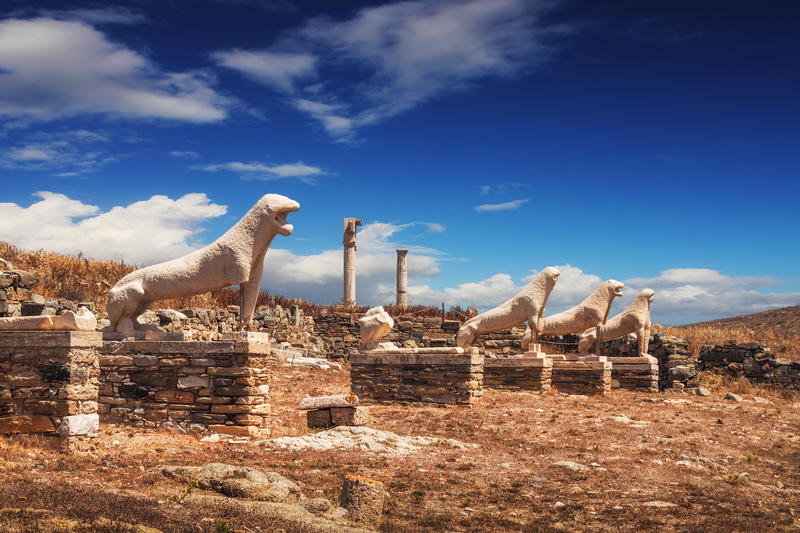
Late May and Εarly June: Α Quieter Alternative to Peak Summer
The transition from late spring into early June is one of Mykonos' most appealing windows.
Late May and early June bring genuinely sunny days, wildflowers still holding on across the island's hillsides, and a version of Mykonos that feels almost private. For travelers who prioritize walking, photography, and unhurried tavernas over beach clubs and DJs, this window is hard to beat.
The weather is increasingly reliable, there are plenty of sunny days, and beaches such as Ornos and Platis Gialos begin to feel distinctly summery. At the same time, the largest summer crowds have not yet arrived.
Prices sit comfortably below high-season rates, and ferries run with far less pressure on availability.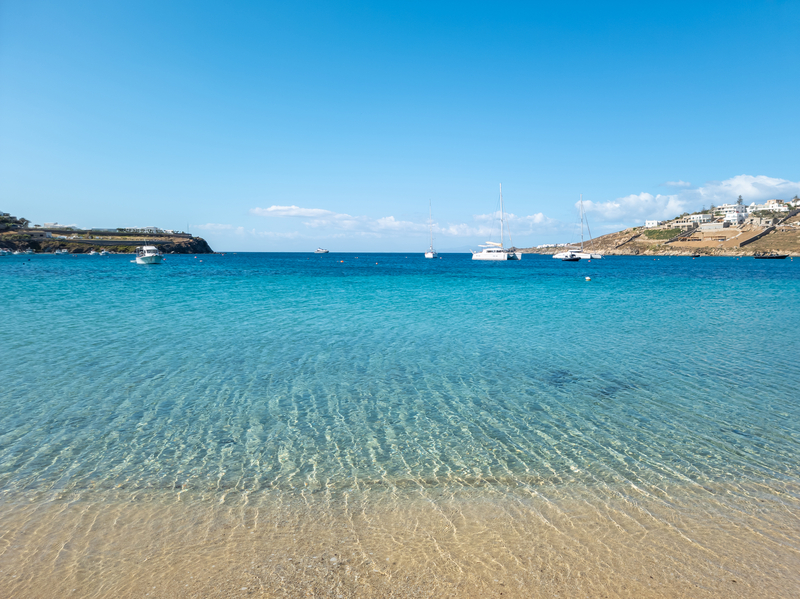
It is also an excellent moment to combine Mykonos with other Greek islands. Ferry connections make it easy to build a wider Cycladic itinerary, pairing Mykonos with destinations such as Paros, Naxos or Santorini.
June: Summer Energy Without August Intensity
By June, Mykonos is firmly in summer mode.
Beach restaurants are busy, shops remain open late, and evenings in Mykonos Town stretch naturally into the night. The island's famous nightlife is already active, with bars and beach clubs welcoming an increasingly international crowd.
June tends to suit travelers who want the full range of Mykonos experiences rather than focusing on just one side of the island.
Days can begin with swimming, continue over a long seaside lunch and end among the narrow streets of town. There is energy everywhere, but especially during the first half of the month, it generally feels more manageable than the height of summer.
June also falls within the broader June to September window when beach-focused travel is at its strongest.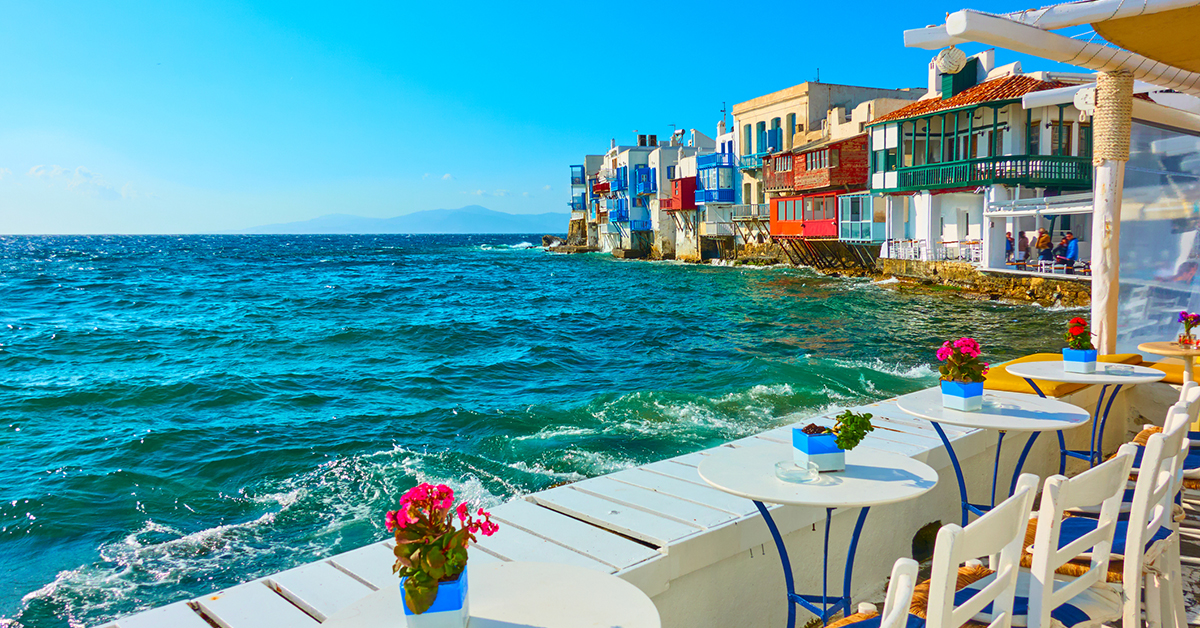
July and August: Mykonos at Full Volume
This is the high season, as well as the island's peak season for crowds, entertainment and demand. Beaches are busy, reservations matter more, and the atmosphere becomes noticeably more energetic.
It is also when Mykonos' international reputation for nightlife is most visible.
Famous DJs arrive for events, beach parties run throughout the summer calendar and evenings often continue well beyond midnight. Paradise Beach is closely associated with this more energetic side of the island, while bars and clubs around town keep the momentum going after sunset.
Travelers coming specifically for the social scene are unlikely to be disappointed.
The streets of Mykonos Town become busier, popular beaches fill quickly and accommodation is in high demand. Planning ahead is particularly useful during this part of the tourist season.
Weather conditions can also be windy at times. The famous Meltemi winds are part of summer in the Cyclades and can bring welcome relief from the heat, although they can occasionally affect beach plans or sea conditions.
For travelers who enjoy energy, people and the feeling of an island operating at full speed, however, the atmosphere is difficult to replicate at any other time of year.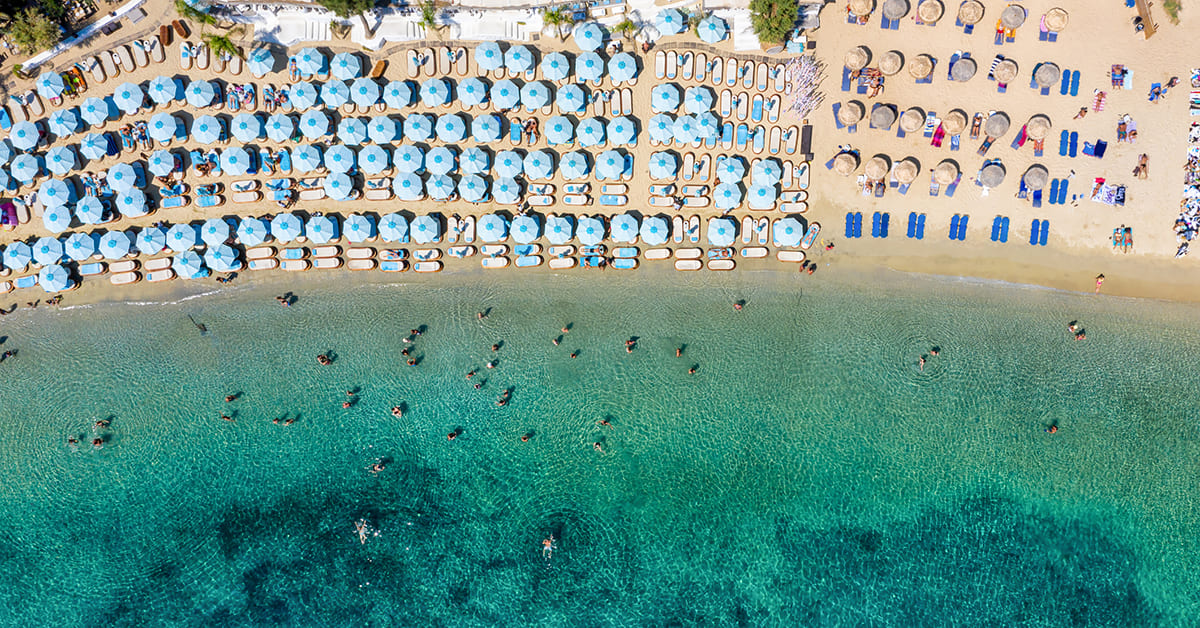
September: Perhaps the Best All-Round Month for Mykonos
The sea has spent months warming under the Aegean sun, restaurants and bars are still busy, and the island remains lively after dark. Yet the intensity gradually softens.
That combination makes September one of the strongest answers to the question of the best time to visit Mykonos.
Beach days remain firmly on the agenda, and the water temperature is generally very comfortable after the heat of summer. Another perk of visiting Mykonos in September is that you'll avoid the summer masses and the difference becomes even more noticeable in late September. The mornings and evenings are ideal, with just enough people to feel lively but never crowded. Αccommodation rates tend to become more reasonable and securing a table at popular restaurants or a spot at a favorite bar is often easier.
Why choose late September?
Travelers who hesitate between summer and autumn should pay particular attention to late September.
It offers a useful middle ground: beach weather without quite the same midsummer intensity, active restaurants and bars, and a more comfortable environment for exploring beyond the coast.
Mykonos in October: Is It Worth Visiting?
Absolutely, as long as the trip matches the season.
Late September into October is where Mykonos quietly becomes a different island and arguably its most rewarding version. The meltemi winds that can make midsummer sailing choppy tend to ease, the crowds thin out substantially, and the water still holds onto its summer warmth well into the month. This is shoulder season in its truest sense: warm enough for a swim, calm enough for a proper walk through Chora without dodging tour groups, and priced in a way that actually reflects the experience.
Travelers arriving in early October may still find warm afternoons, open restaurants and peaceful beaches. Restaurants that were fully booked in August suddenly have a table. Beach clubs stay open but with room to breathe. Sightseeing around the island: the windmills, the Aegean Maritime Museum, the quiet chapels tucked into hillside paths, happens at an unhurried pace. For anyone weighing nightlife against relaxation, October tends to offer a version of both: the bars and tavernas are still very much alive, just without the peak-season crush.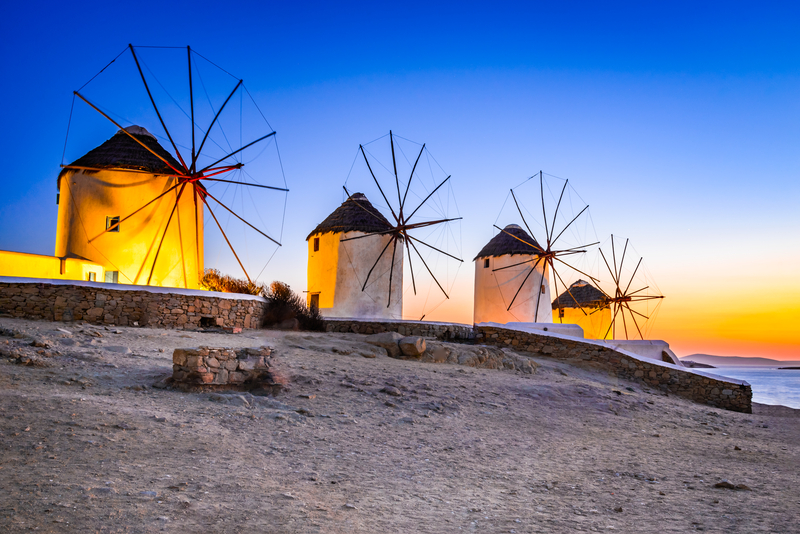
Can you swim in Mykonos in October?
Mykonos in October brings the same benefits as May and September, without the guaranteed warm weather for sunbathing or beach time. So, the answer is often, yes but particularly earlier in the month.
The Aegean retains heat from summer, so sea conditions can remain pleasant well beyond September. Still, autumn weather is naturally more variable, which means a week of warm beach-friendly afternoons cannot be guaranteed in the same way as during midsummer.
November to March: Discovering Mykonos Off Season
From November to March, Mykonos slows almost to a stop.
This is firmly the low season, when the summer-oriented tourism infrastructure scales back significantly. Many beach clubs and seasonal restaurants close for the winter, and the energetic nightlife of summer gives way to a handful of local tavernas that stay open for residents and the occasional off-season visitor. This isn't the island most people picture, and it isn't trying to be, but for those genuinely curious about how Mykonos lives when it isn't performing for tourists, the off season has its own quiet honesty. It's not typically recommended for a first visit, though it does suit travelers already familiar with the island who simply want to see it differently.
When is the best time to visit Mykonos?
For most travelers, the ideal period falls between late May and early October.
The main tourist season gradually begins in spring, gathers momentum through June and reaches its height in July and August, before easing through September and October.
Best Time to Visit Mykonos for Beaches and Swimming
If the main reason for visiting Mykonos is to spend long days by the Aegean, the period from June to September offers the most reliable beach conditions. By early summer, the days are warm enough for swimming and relaxing on the sand, while the sea continues to heat up as the season progresses.
July brings some of the hottest weather of the year, but September often offers an especially appealing balance. The air is still warm, the water temperature has benefited from an entire summer of sunshine and the beaches gradually become less crowded as the month moves on.
Where to swim also depends on the kind of day you have in mind. Ornos is a convenient choice for a relaxed beach day with plenty nearby, while Platis Gialos combines a beautiful stretch of sand with easy access to restaurants and other beaches along the southern coast. Paradise Beach, meanwhile, suits travelers looking for a livelier atmosphere.
For swimming without the height-of-summer crowds, June and September are particularly strong choices. Early October can also surprise with warm sea conditions, although the weather becomes less predictable as autumn progresses.
Best Time to Visit Mykonos for Sightseeing
Mykonos may be famous for beaches and nightlife, but some of its most memorable moments happen away from the sunbeds. For travelers who want to devote more time to sightseeing, late spring and early autumn are often much more comfortable than the middle of summer.
Start with Mykonos Town, where getting slightly lost is part of the experience. Its narrow whitewashed streets reveal small churches, boutiques, hidden courtyards and glimpses of the sea between the buildings. Without the strongest summer heat, there is more time to wander slowly rather than moving from one patch of shade to the next.
Little Venice and the windmills are obvious stops, particularly towards sunset, while a morning trip to Delos adds an entirely different dimension to the journey. The archaeological island lies just a short boat ride away and offers a fascinating contrast to the cosmopolitan image usually associated with Mykonos.
May, September and October are especially rewarding for this slower style of travel. Temperatures tend to be more comfortable for walking, and popular landmarks can be easier to enjoy outside the busiest part of the tourist season.
Is Mykonos Better in June or September?
June and September are often the two months travelers compare when trying to avoid the busiest part of summer, and both have plenty in their favor.
June has the excitement of a season that is just getting started. Days are long, the weather is warm and the island feels increasingly energetic as summer approaches. It is an excellent choice for travelers who want the atmosphere of Mykonos in full swing but would rather arrive before the busiest weeks.
September feels different. The island is still lively, but the pace begins to soften. The sea is warmer after months of summer sun, the largest crowds gradually disappear and finding accommodation or making plans at short notice can become easier, particularly in late September.
For travelers prioritizing long days and the anticipation of summer, June may have the edge. For warm swimming, fewer crowds and a slightly more relaxed atmosphere, September is difficult to beat.
In practice, there is no wrong choice between the two. They simply sit on opposite sides of the summer season: June as Mykonos builds towards its peak, and September as the island slowly begins to exhale.
So, When Should You Go?
There isn't a single correct answer, only the right season for what someone wants out of the trip.
Want the full Mykonos experience: beach clubs, DJs, beach parties, warm water, long sunny days? Aim for July or August, and book ferries early.
Want the same energy with fewer crowds and better prices : the answer, increasingly, is late September through October. It's the shoulder season that delivers most of summer's appeal without summer's pressure.
Want a quieter, slower island before the season kicks off? Late May to early June offers warmth, light crowds, and easy ferry access.
Want to see the island at rest? The low season, November through March, is for travelers who already know Mykonos and want to meet it on different terms.
When to combine Mykonos With Other Greek Islands
A visit to Mykonos rarely has to end with Mykonos.
Its position in the Cyclades makes it an excellent starting point for an island hopping journey, particularly during the main operating season when ferry connections are at their most extensive.
Paros offers charming villages and beautiful beaches. Naxos brings long stretches of sand, mountain villages and a strong food culture. Santorini offers volcanic landscapes and one of the most recognizable island settings in Greece.
Combining Mykonos and Naxos works especially well for travelers who want two very different interpretations of the Cyclades. Adding Santorini creates a route connecting three of the country's best-known islands, while Mykonos, Paros and Naxos make an easy Cycladic combination for travelers who want a mix of beaches, villages and lively towns.
Connections with Athens also make Mykonos easy to incorporate into a wider Greek itinerary. Travelers can begin or end their journey around Athens before continuing through the Aegean.
With SEAJETS, seasonal ferry connections make travelling between Mykonos and destinations including Santorini, Naxos and Paros simple to include in an island itinerary. Always check the schedule for the specific travel dates, particularly outside the main summer months.